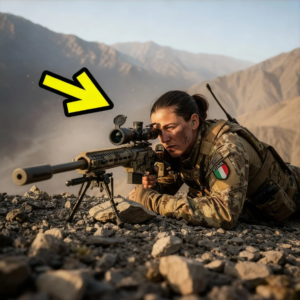
Venduta all’età di 18 anni a un contadino solitario, ma i suoi figli gemelli l’hanno adorata ancor prima di lui.

The auctioneer’s voice cracked through the afternoon heat like a whip against stone, and Norah Finch stood on the platform with her chin high, even though her knees wanted to buckle. She’d sold everything she owned 3 days ago, her mother’s Bible, the quilt from her grandmother, even the brass locket with her father’s picture inside, but it hadn’t been enough to cover the debts he’d left behind when the collar took him.
Now she was the last thing left to sell. The men below looked up at her with eyes that made her skin crawl. She focused on a knot hole in the wood above their heads and tried not to hear the numbers being shouted. 18 years old and this was how her life would be measured now in dollars and cents like a horse or a plow.
The sun beat down on her dark hair and sweat trickled down her spine beneath the only decent dress she had left. It was pale blue cotton faded from too many washings and it hung loose on her frame because she hadn’t eaten much in the past week. 200 someone called and Norah’s stomach turned. 250 said another voice thick with tobacco and something worse.
She kept her eyes on that kn hole. She’d promised herself she wouldn’t cry. Her father had raised her to be strong, to face whatever the frontier threw at her without flinching. But he’d never imagined this. Nobody imagined this for their daughter. 300. The new voice was different. Quiet, almost reluctant. Norah’s gaze dropped before she could stop herself, and she found a tall man standing at the back of the crowd.
He wore a dusty brown hat pulled low, and his face was weathered in a way that spoke of hard years under an unforgiving sun. He didn’t look at her the way the others did. He looked at her the way someone might look at a problem they weren’t sure they wanted to solve. “350 The tobaccoed man countered, stepping forward with a grin that showed missing teeth.
The tall man’s jaw tightened. $400. The crowd went quiet. $400 was more than most men in Cold Water Ridge made in half a year. The auctioneer’s eyes gleamed with greed, and he pointed at the tall man with theatrical flare. $400. Going once. Nobody spoke. Going twice. The tobacco man spat into the dirt and turned away, muttering curses. Sold to Mr. Calhound.
Norah’s knees finally did give way just a little, but she caught herself on the wooden railing. Mr. Calhoun. She’d heard that name before. He owned the largest cattle ranch in the territory, a sprawling stretch of land 15 mi north of town. They said his wife had died 2 years back, leaving him with young children.
They said he was fair but hard, the kind of man who didn’t waste words or time. They didn’t say he’d spend $400 on a stranger. The auctioneer waved her down from the platform and Norah descended on shaking legs. The crowd parted as she walked through them and she felt their eyes following her like brands against her skin. Mr. Calhoun waited by a wagon hitched to two sturdy horses.
Up close she could see the lines around his eyes, the gray threading through his dark hair. He was maybe 35, maybe older. His hands were scarred and calloused, and he held the res with the easy confidence of a man who’d spent his whole life working. “Can you cook?” he asked. No greeting, no introduction. “Yes, sir.” “Clean, mend clothes.” “Yes, sir.
” He nodded once, then gestured to the wagon. “Get in. We are losing daylight.” Norah climbed onto the bench beside him, and he clicked his tongue at the horses. The wagon lurched forward, and Cold Water Ridge began to fall away behind them. She watched the town disappear, the crooked buildings, the dusty main street, the saloon where her father had drunk away their savings, and felt nothing.
That place had taken everything from her. Whatever waited ahead couldn’t be worse. They rode in silence for over an hour. The landscape shifted from scrubby flatland to rolling hills dotted with msquite and cedar. The air smelled like dry grass and distant rain that would never come. Norah’s hands twisted in her lap, and she tried to imagine what her life would be now.
A cook, probably a housekeeper, maybe worse. Though Mr. Calhoun didn’t seem like the type, he hadn’t looked at her the way the tobacco man had. I have two children, he said suddenly, breaking the silence. Twins, boy and a girl. They’re 6 years old. Norah glanced at him, surprised. Yes, sir. Their mother died when they were four.
Had a fever that wouldn’t break. His voice was flat, like he was reciting facts instead of talking about grief. I’ve had three housekeepers since then. None of them lasted more than a few months. Why not? The question slipped out before she could stop it. Mr. Calhoun’s mouth twitched, almost a smile, but not quite.
The children ran them off. Lizzy and Sam don’t take well to strangers telling them what to do. Norah’s stomach sank. Difficult children. That explained the $400. Nobody else wanted the job. I won’t promise I’m good with children, she said carefully. I don’t have experience withthem. Didn’t ask you to promise anything. He shifted the res.
You’ll do your best or you won’t. Either way, you’ve got a roof and three meals a day. That’s better than what you had this morning. It was true, but the bluntness of it strung. Norah turned her face away and watched the horizon. The sun was starting to sink, painting the sky in shades of orange and pink that were almost painful to look at.
Beautiful and harsh at the same time, like everything else out here. The ranch appeared as the light began to fade. It was bigger than she’d expected, a sprawling wooden house with a wide porch, several barns, a corral filled with horses, and a bunk house where the ranch hands must sleep. Chickens scattered as the wagon rolled past, and a dog came running up, barking excitedly, until Mr.
Calhoun told it to hush. Everything looked well-maintained, but tired, like it carried the weight of too much work and not enough hands to do it. Mr. Calhoun brought the wagon to a stop near the house and climbed down. He didn’t help her descend, just walked toward the porch and called out, “Lizzy, Sam, come here.
” Norah stepped down carefully, her legs stiff from the ride. She smoothed her dress and tried to calm her racing heart. Two children. She could handle two children. The door banged open and two small figures came tumbling out. They were both thin and wiry with sunbleleached hair and faces covered in freckles. The girl wore a dress that had seen better days, and the boy’s trousers were patched at the knees.
They stopped at the edge of the porch and stared at Nora with identical blue eyes that were far too suspicious for six-year-olds. This is Miss Finch, Mr. Calhound said. She<unk>ll be staying with us. You’ll treat her with respect. The boy Sam crossed his arms. The last lady said, “We were demons.” The one before that cried, Lizzy added.
Her voice was high and sweet, but there was steel underneath it. She cried every night. We could hear her through the walls. “Mr. Calhoun’s jaw tightened. That’s enough. Are you going to cry?” Sam asked Norah directly. Norah looked at the two of them, small and fierce and guarded, and something in her chest loosened. These weren’t demons. They were scared.
They’d lost their mother and watched stranger after stranger tried to take her place. And every time it hadn’t worked. Every time the stranger had left. She crouched down so she was at their level. I might, she said honestly. I cry sometimes when I’m sad or angry, but I won’t cry because of you. I promise you that.
The twins exchanged a glance, some silent communication passing between them. Do you know any stories? Lizzy asked. A few good stories, not boring ones. Norah thought about the tailies her father used to tell before the drinking got bad stories about clever foxes and brave knights and girls who saved themselves.
I know some good ones. Can you braid hair? this from Lizzy who reached up to touch her own tangled mess. Yes. Can you shoot? Sam’s question was more challenging. I can learn. Sam uncrossed his arms. Par says the same thing. He says if you’re willing to learn, you can do just about anything. Mr. Calhound cleared his throat.
Inside both of you wash up for supper. The twins hesitated, then turned and ran back into the house, their feet thundering on the wooden floor. Mr. Calhoun watched them go, and something in his expression softened for just a moment before the hardness returned. “They liked you,” he said. “It wasn’t quite approval, but it wasn’t disapproval either.
” “They’re testing me,” Norah replied. “Yes,” he started toward the house, then paused and looked back at her. “Your room is upstairs. Second door on the left. Get settled and come down when you’re ready. There’s stew from yesterday that needs warming. Norah followed him inside. The house was dim and cluttered with dust on most surfaces and dishes stacked in the wash basin.
A stone fireplace dominated one wall, and the furniture looked handmade but sturdy. It smelled like woods and old coffee, and the particular kind of loneliness that came from too many empty spaces. Her room was small but clean with a narrow bed, a chest of drawers, and a window that looked out over the hills.
Someone had left a picture of water and a clean towel on the dresser. Norah sat on the bed and let herself shake for a minute, just one minute, before she pulled herself together. She had work to do. The next three weeks were the hardest of Norah’s life. The twins tested her constantly, hiding her shoes, putting salt in the sugar bowl, releasing the chickens from their coupe.
right before bedtime. Sam had a talent for disappearing when it was time for chores. And Lizzy could lie with such a straight face that Norah almost believed her when she claimed the dog had eaten all the biscuits. But Norah didn’t cry. She didn’t yell. She met every challenge with steady patience.
And slowly, slowly, the twins began to soften. She braided Lizzy’s hair every morning,working the tangles out gently while telling stories about princesses who wore trousers and climbed mountains. She taught Sam to make biscuits from scratch, showing him how to work the dough until it was just right. She learned their rhythms, their moods, the way Sam got quiet when he was sad, and Lizzie got loud when she was scared. Mr.
Calhound watched it all from a distance. He was gone most days, working the ranch with his hands, fixing fences and tending cattle, and doing all the things that kept a place this size running. He came in for meals and ate in silence, his eyes moving between Norah and the twins like he was trying to solve an equation. He never praised her.
He never criticized her. He just watched. It made Norah nervous in a way she couldn’t quite name. One evening, after the twins were asleep, she sat on the porch to escape the heat inside. The sun had set an hour ago and the stars were coming out in a great sprawling blanket overhead. She could hear the cattle loing in the distance and the wind moving through the grass.
It was peaceful in a way that Cold Water Ridge had never been. The door opened behind her, and Mr. Calhoun stepped out. He didn’t say anything, just leaned against the porch railing and looked out at the dark shapes of the hills. “They’re good children,” Norah said quietly. “They are,” he was silent for a moment.
“Their mother would be proud of who they’re becoming. It was the first time he’d really mentioned his wife, and Norah didn’t know how to respond. She settled for I’m sure she would be. “You’re good with them,” he said, and there was surprise in his voice. better than the others. I just listened to them. It’s more than that.
” He turned to face her, and in the dim light from the house, she could see something in his expression that hadn’t been there before. Something almost like gratitude. You treat them like people, not like problems to manage. Norah’s throat tightened. They deserve to be treated like people. Mr. Calhound nodded slowly. He opened his mouth like he wanted to say more, then closed it again.
The moment stretched between them, heavy with things unspoken. “Thank you,” he finally said. “For staying.” “I didn’t have much choice,” Norah replied. “But there was no bitterness in it, just fact.” “You had a choice every day,” he pushed off from the railing. “You could have made this harder than it needed to be. You didn’t.
” He went back inside before she could respond. And Norah sat there in the darkness, her heart beating faster than it should. She told herself it was just relief, just the satisfaction of knowing she’d done her job well. But something about the way he’d looked at her made her think of things she had no business thinking about.
Summer burned into autumn, and the work on the ranch intensified. Mr. Calhoun, she still couldn’t think of him as anything else, hired extra hands for the cattle drive. rough men who eyed her with curiosity until Mr. Calhoun made it clear she was under his protection. The twins started helping more, carrying water to the hands and feeding the chickens without being asked.
Norah found herself settling into a rhythm that felt almost like belonging. She woke before dawn to start breakfast. Spent her days cooking and cleaning and mending. Helped put the twins to bed with stories and songs. She learned the landscape around the ranch, the best places to find wild herbs, and the way the light changed as the seasons shifted. She learned Mr. Calhound, too.
His name was Daniel, though nobody called him that except his children. He was fair with his men, but demanding. He worked harder than any of them, up before the sun, and falling into bed long after dark. He had a scar on his left hand from a broken fence wire and another on his collarbone from a horse that had thrown him when he was young.
He drank his coffee black and hated beans but ate them anyway because they were cheap and filling. He was also lonely. She could see it in the way he sat apart from everyone at meal times, in the way he sometimes stopped in the middle of working to stare at nothing. He loved his children fiercely, but didn’t know how to talk to them about anything that mattered.
He’d loved his wife, and losing her had carved something out of him that hadn’t grown back. Norah tried not to think about any of it. She was the housekeeper, that was all. But then came the night the twins got sick. It started with Lizzy complaining about her stomach during supper. By the time Norah got her into bed, the girl was burning up with fever.
Sam followed an hour later, his face pale and his body shaking with chills. Norah worked through the night, sponging them down with cool water, trying to get them to drink, watching their small faces twist with discomfort. Daniel came in around midnight and found her sitting between their beds, one hand on each child’s forehead.
“How bad?” he asked, and his voice was raw with fear. “Fever?” Norah said, “But they’restrong. They’ll fight it.” Their mother, he stopped, swallowed hard. She had a fever. Norah understood then this wasn’t just sickness. This was his worst nightmare. Walking back through the door, she stood and crossed to him and without thinking, she put her hand on his arm.
They’re not her, she said firmly. They’re fighters. Look at them, Daniel. They’re fighters. It was the first time she’d used his name, and he flinched like she’d struck him. But he didn’t pull away. He just stood there staring down at her hand on his arm. And when he looked up, his eyes were wet. “I can’t lose them,” he whispered.
“You won’t,” she said it with more confidence than she felt. But he needed to hear it. “I won’t let you.” They worked together through the night. Daniel held Sam while Norah got him to take sips of water. Norah sang to Lizzy while Daniel changed the cool cloths on her forehead. They didn’t talk much, but every time their eyes met, something passed between them that had nothing to do with the children and everything to do with the space they were creating together.
By dawn, the fevers broke. Both twins fell into deep healing sleep, and Norah sagged with relief. Daniel caught her before she could fall, his hands strong and steady on her shoulders. “Easy,” he murmured. “You need rest, too. I’m fine. You’re exhausted. His hands didn’t move. Go sleep. I’ll watch them. Norah wanted to argue, but her body had other ideas.
She nodded and let him guide her toward the door. At the threshold, she turned back. Daniel. Yes. Thank you for trusting me with them. His expression shifted, something cracking open in his carefully guarded face. I do trust you more than I’ve trusted anyone in a long time. The words hung in the air between them, waited with meaning that neither of them was ready to name.
Norah fled to her room before she could do something foolish, like cry or worse, like tell him that she’d started to care about this broken family more than she’d ever planned to care about anything. The twins recovered quickly, bouncing back with the resilience of children. But something had changed. They clung to Nora more, called her Miss Norah instead of just miss.
saved her the best pieces of chicken at supper. Sam asked her opinion on important matters like which horse was fastest and whether frogs could really predict rain. Lizzy started calling her our Nora when talking to friends. Daniel changed too. He started coming in earlier for supper, staying to talk after the twins went to bed. He asked Nora about her life before the ranch.
And she found herself telling him things she’d never told anyone, about her father’s drinking, about the shame of standing on that auction platform, about the terror of not knowing what would come next. He told her about his wife Mary, about how they’d met at a church social and married three months later, about how she’d been small and fierce and utterly fearless, the kind of woman who could deliver a calf and bake bread and shoot a rattlesnake all in the same day.
About how the fever had taken her so fast he barely had time to say goodbye. “I was angry for a long time,” he admitted one night. They were sitting on the porch again, the stars bright overhead. Angry at God, at the world, at her for leaving, at myself for not being able to stop it. “Are you still angry?” Norah asked.
He was quiet for a long moment. “Not as much. Not since you came.” Norah’s breath caught. “She should say something safe, something that would keep them in their proper places.” But she was tired of safe. Tired of proper. I’m glad I came here, she said instead. Even though it wasn’t my choice, I’m glad. Daniel turned to look at her, and the expression on his face made her heart stutter. Nora.
The door banged open, and Sam came running out in his night shirt. P. Miss Norah, there’s something in my room. The moment shattered. Daniel was on his feet instantly, heading inside with Sam. Norah followed, her pulse still racing from what had almost happened. There was nothing in Sam’s room except a moth that had gotten in through a crack in the window.
But by the time they’d caught it and released it outside, the spell was broken. Daniel said good night and disappeared to his own room. Norah lay awake for hours, staring at the ceiling and trying not to think about the way he’d said her name. Winter came hard that year. The first snow fell in early November, blanketing the ranch in white and making everything twice as difficult.
The cattle had to be brought down from the high pastures. Pipes froze. The wind cut through every gap in the walls like a knife. The twins loved it. They built snowmen in the yard and had snowball fights that left them soaked and laughing. Norah watched them from the kitchen window while she cooked and felt something warm spreading through her chest that she was afraid to name.
Daniel caught her watching one afternoon. He came up beside her close enough that she could feel the heat ofhim. “They’re happy,” he said quietly. “Really happy. I haven’t seen them like this since before Mary died.” “They’re good kids,” Norah replied. “They just needed. They needed you.” He turned to face her fully. We all did. I just didn’t know it until you were here.
Norah’s throat went tight. Daniel, I need to say this. His hands were clenched at his sides like he was holding himself back. I know how you came here. I know I bought you like like property. It makes me sick to think about it, but I need you to know that’s not how I see you. That’s not what you are.
What am I? The question came out barely above a whisper. He reached up slowly, giving her time to pull away, and brushed a strand of hair back from her face. His hand lingered against her cheek, rough and warm. “You’re the woman who saved my children,” he said. “You’re the woman who made this house feel like a home again.
You’re He stopped, swallowed hard. You’re the woman I’m falling in love with, and I don’t know what to do about it.” Norah’s world tilted. She’d known something was growing between them, but hearing him say it out loud made it real and terrifying and wonderful all at once. “I’m 18 years old,” she said, and hated how young her voice sounded.
“I don’t have anything. I don’t own anything. I’m just. You’re everything,” Daniel cut her off. “Age doesn’t matter. Money doesn’t matter. You’re smart and strong and kind, and my children love you. I love you,” he said it fiercely like a challenge. I love you, Norah Finch, and I know I have no right to ask, but I need to know if there’s any chance you could feel the same.
Norah looked up at him, at this man who’d bought her to save her from worse, who’d given her a home and purpose, and something she’d never expected to find. She thought about the way he looked at his children, the way he worked until his hands bled, the way he’d sat with her all night while the twins fought their fevers. She thought about the space he’d carved out for her in his life.
Careful and respectful and hopeful. I do, she whispered. I love you, too. I think I have for a while now. I was just too scared to admit it. The smile that broke across Daniel’s face was like sunrise after a long night. He kept her face in both hands, his thumbs brushing her cheekbones, and when he kissed her, it was gentle and desperate and full of promise.
Norah melted into him, her hands fisting in his shirt, and for the first time since her father died, she felt safe. “Gross,” Sam’s voice from the doorway made them jump apart. “The boy stood there with Lizzy,” both of them grinning. “Are you getting married?” Lizzy demanded. “Because we want you, too. We already decided.” Daniel laughed, a sound Norah had never heard from him before, surprised and joyful and completely unguarded.
Did you now? Yes, Sam said firmly. Miss Norah is ours. She has to stay forever. Norah looked at the twins, then at Daniel, and felt tears pricking at her eyes. I think I can manage that. Daniel pulled her close again, and this time when he kissed her, the children cheered. They were married 6 weeks later in the small church in Cold Water Ridge.
Norah wore a new dress that Daniel bought her, cream colored with lace at the collar. The twins stood up with them solemn and proud. The ranch hands came and some of the neighbors and even the preachers seemed moved by the ceremony. When the preacher said, “You may kiss your bride,” Daniel took his time about it, holding Norah like she was precious, like she was chosen, like she was loved.
And when they pulled apart, Lizzie tugged on Norah’s skirt and whispered loud enough for everyone to hear, “Now you’re really ours.” That night after the celebration was over and the twins were finally asleep, Norah and Daniel stood on the porch of their home. The stars were bright overhead and the air smelled like snow and pine and the particular sweetness of a hard one future.
“Are you happy?” Daniel asked, his arm around her waist. “Norah thought about the girl who’d stood on that auction platform 8 months ago, terrified and alone and certain her life was over. She thought about the woman she’d become. A wife, a mother to two wild hearts, a partner in building something worth keeping. “Yes,” she said simply. “I’m home.
” Daniel kissed her temple, and they stood there together, two people who’d found each other in the hardest way possible, and decided to hold on anyway. Inside, the twins slept peacefully, safe in the knowledge that their family was whole again. And outside the frontier stretched on forever, full of promise and possibility, and the kind of love that could weather anything.
News

😱SHOCK: Belén Rodríguez scompare dalla TV. Solo perché…, perché?
😱SHOCK: Belén Rodríguez scompare dalla TV. Solo perché…, perché? Negli ultimi mesi il mondo dello spettacolo italiano è stato attraversato da un’ondata di stupore, domande e inquietudine: Belén Rodríguez, una delle figure più iconiche e riconoscibili della televisione italiana, è improvvisamente sparita dal piccolo schermo. Nessuna conduzione, nessuna ospitata di rilievo, nessuna presenza fissa nei […]

Levante e la sua Dichiarazione sulla Eurovision 2026: Un Rifiuto alla Politica in Tempo di Crisi
Levante e la sua Dichiarazione sulla Eurovision 2026: Un Rifiuto alla Politica in Tempo di Crisi Levante, una delle voci più distintive e amate della scena musicale italiana, ha fatto un annuncio che ha scosso sia il mondo musicale che quello politico. La cantante e autrice, che ha fatto della sua musica una fusione di […]
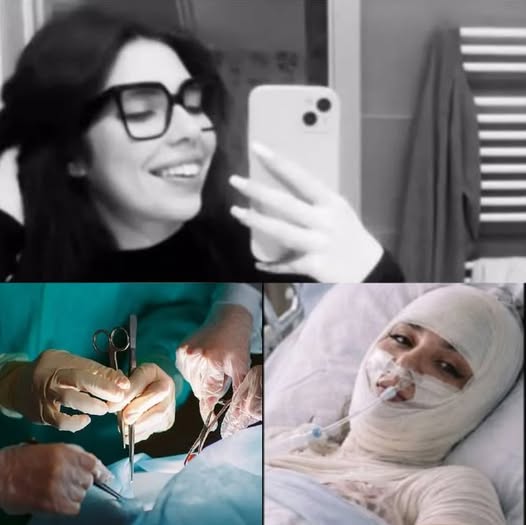
Tragedia a Crans Montana: Elsa Rubino, l’intervento chirurgico e la lunga lotta per la vita
Tragedia a Crans Montana: Elsa Rubino, l’intervento chirurgico e la lunga lotta per la vita La tragedia che ha colpito Elsa Rubino, la quindicenne biellese rimasta gravemente ustionata nell’incendio del locale Le Constellation a Crans Montana, ha scosso non solo la sua famiglia, ma tutta la comunità di Biella e il mondo intero. La giovane, […]

Caso di omicidio di Federica Torzullo: il marito Carlomagno aveva un avvocato: “Ecco perché litigavano…”
Caso di omicidio di Federica Torzullo: il marito Carlomagno aveva un avvocato: “Ecco perché litigavano…” Lunedì il mio assistito si è avvalso della facoltà di non rispondere per un’unica ragione, perché noi non eravamo stati notiziati del decreto di Fermo che c’è stato notificato in carcere alle ore 2:30. Questa è stata l’unica motivazione, quindi […]
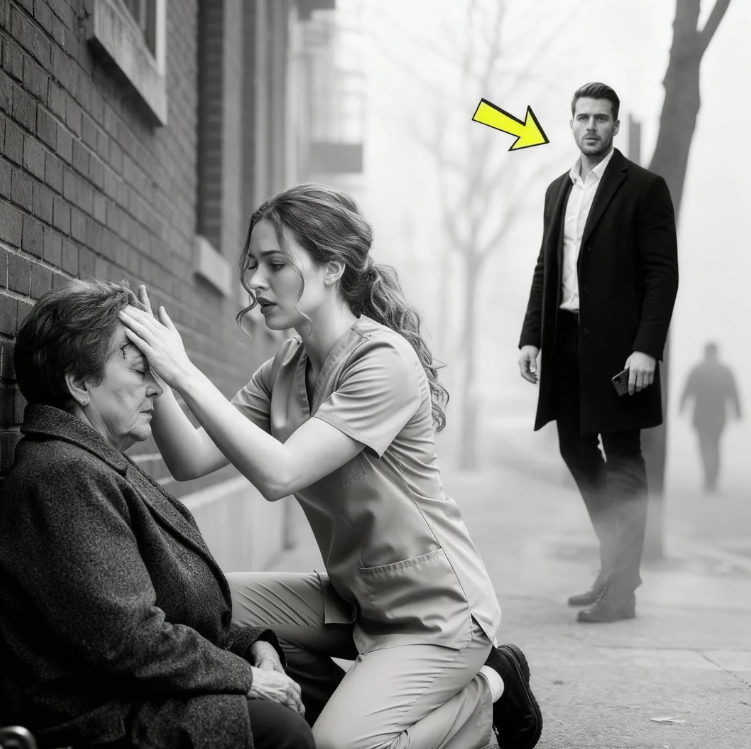
Una timida studentessa di infermieristica ha saltato l’esame per aiutare uno sconosciuto: il giorno dopo, un CEO è andato a cercarla.
Una timida studentessa di infermieristica ha saltato l’esame per aiutare uno sconosciuto: il giorno dopo, un CEO è andato a cercarla. Aveva 18 minuti per salvare il suo futuro. La donna che sanguinava sul marciapiede aveva forse cinque minuti di vita. Cosa sarebbe scegli? Questa è la vera storia di come si fa una scelta […]
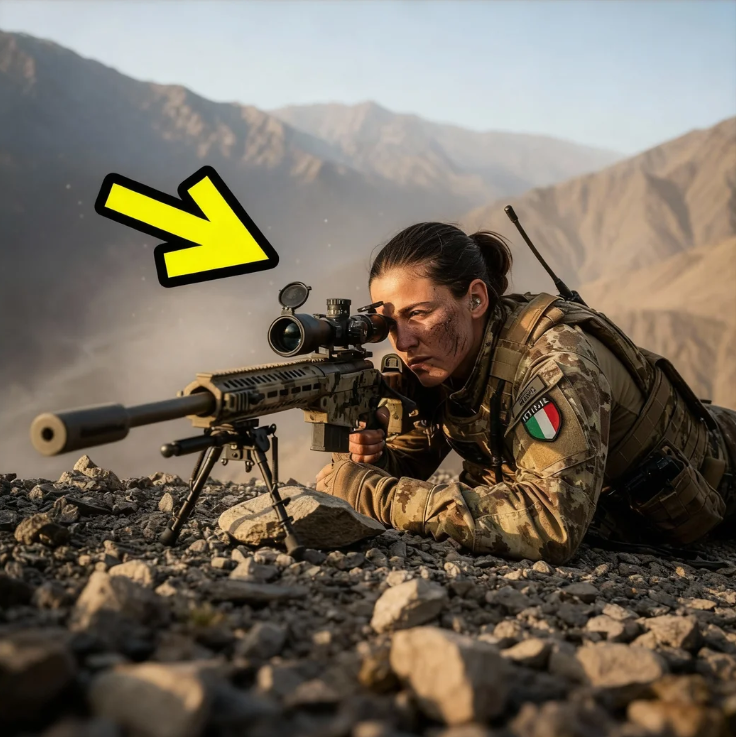
“Chi sta sparando?” — Il comandante dei SEAL rimase immobile mentre gli spari echeggiavano da soli 3 metri di distanza nella valle.
“Chi sta sparando?” — Il comandante dei SEAL rimase immobile mentre gli spari echeggiavano da soli 3 metri di distanza nella valle. Oggi vi raccontiamo la storia di un colpo di fucile che echeggiò attraverso una valle afghana e gelò il sangue nelle vene di un comandante degli incursori della Marina Militare italiana, non per […]
End of content
No more pages to load