“COMPRA LA MIA BICICLETTA… LA MAMMA HA BISOGNO DELLA CENA PER COMIDA!” — Amministratore Delegato di Despidió a su Madre Soltera
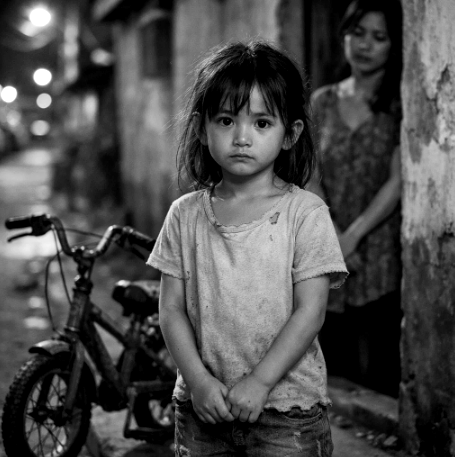
A girl, barely 7 years old, placed her bicycle on the sidewalk with a sign that read “For Sale.” It wasn’t a game; it was the hardest decision of her short life. The bicycle was her greatest treasure, but now it had become her only hope. Her mother had no money for food, and hunger was beginning to hurt more than any sacrifice.
The neighbors looked on in astonishment and sadness. No one expected to see a girl offering the only thing she had. Then a luxury car pulled up in front of her, and fate changed forever. The afternoon stretched over a quiet neighborhood. The sun fell slowly on the peeling walls. Ana placed her bicycle on the sidewalk in front of her house next to a makeshift sign: “For Sale.
” Her small hands trembled, but her gaze was steady, like that of someone carrying a weight beyond her years. Mariana, her mother, watched her from the doorway, her heart breaking as she watched her give up her treasure. “Ana, daughter, are you sure you want to do this?” she asked, trying to hold back her tears. The girl looked down and took a deep breath. “Yes, Mom, I need to help you.
” The silence of the neighborhood bore witness, a heavy, suffocating silence. Neighbors passed by, glanced at the sign, and moved on. No one dared to stop. Ana stood steadfastly beside her bike like a small warrior in the midst of an invisible battle. The air smelled of dust and cooking smoke. Ana offered her bike in a soft voice, but filled with a moving courage.
An older man stopped for a moment, looked at her compassionately, but didn’t say a word. Another neighbor murmured, “What injustice? A little girl selling what little she has.” Mariana clenched her hands from the doorway. Every second was a burning wound. Ana held the handlebars as if she still wanted to cling to her childhood. The sun was setting and the bicycle seemed to lose its shine amidst the dust.
The girl thought of her mother on her days without work, of the empty plates on the table. “I hope someone buys it,” she whispered with her eyes closed. And at that moment, the roar of an engine broke the calm of the street. An imposing black car stopped in front of the house. Its tires kicked up dust on the sidewalk. The neighbors came out to look, surprised by so much wealth on such a poor street.
Lucas Varela, an elegant man in a dark suit and cold gaze, stepped out of the door. Ana looked at him with wide eyes. She had never seen someone so different from her world. Lucas fixed his gaze on the sign on the bicycle. He raised an eyebrow, intrigued. “Are you selling it?” he asked in a deep, distant voice.
Ana swallowed, but He answered firmly, “Yes, sir, I need money for food.” Murmurs grew among the neighbors. The contrast was brutal: innocence versus power. Mariana, upon recognizing the man, felt a chill. She knew exactly who it was. The man asking about the bike was the same man who had ruthlessly fired her weeks before.
Tension filled the air. The neighbors’ murmurs mingled with Mariana’s silence. She took a step forward. Her face paled when she saw the man who had caused them so much harm. “You,” she whispered almost voicelessly. Her hands trembled as she pointed at the CEO. Lucas looked up and instantly recognized the woman.
It was Mariana, the employee he had unceremoniously fired weeks before. He had done so coldly, citing restructuring, without thinking about the life behind that contract. Ana looked at her mother in confusion. She still didn’t understand the magnitude of the wound. “Mom, do you know him?” she asked in an innocent voice, breaking the silence.
Mariana He took a deep breath, his eyes filled with suppressed rage and sadness. “Yes, daughter, he’s the man who took my job.” The wind blew hard on the street, as if trying to sweep away the weight of that confession. Ana frowned. Her innocent eyes were fixed on the CO. “Why did you fire my mom?” she asked with unexpected courage. Her voice trembled, but it didn’t break. Lucas remained motionless.
The neighbors watched attentively, waiting for his reaction. Mariana tried to hug her daughter, but Ana stood firm next to the bike. The man swallowed. He hadn’t expected such direct questioning from a child. “It was a company decision,” he replied, trying to sound confident. But her words remained hollow in the air. Without strength or conviction.
Ana held the sign with her small hands. “So, buy my bike. We need money to buy food.” Silence fell suddenly, like an invisible blow that shook everyone present. Lucas looked at the bike, but in reality, he saw the harshness of his decision reflected in that little girl. Every ray of light illuminated Ana’s eyes, eyes that mixed innocence and pain.
The neighbors whispered. Will she be able to buy it? She’ll have a heart. Mariana, with tears held back, hugged her daughter from behind as if she wanted to protect her. The CEO sighed deeply. His usual arrogance seemed to waver. For the first time in a long time. He wasn’t a businessman,he was a man cornered by the truth.
“How much are you asking for it?” he finally asked, his voice breaking. Ana answered without hesitation. “Whatever is enough to buy food.” And in that instant, the entire street held its breath. The street felt like an improvised theater. Each neighbor was a silent spectator to that encounter. Lucas, accustomed to boardrooms and luxury suits, looked out of place on that humble sidewalk.
Ana stood firm, her hands resting on the handlebars, without looking away. “My bike is the only thing I have,” she said clearly. “But you took what belonged to my mom.” The SEO took a deep breath. For a moment, he lowered his eyes as if he’d received an invisible blow. Mariana said nothing, but her face spoke volumes. Anger, pain, and wounded dignity.
“Sir, if you buy it, at least you’ll have done something good,” a neighbor murmured from the corner. The murmurs grew louder. The pressure grew like a knot in the air. Lucas knew he couldn’t escape those stares, the silent judgment of the entire neighborhood. Ana clutched the sign tightly. Her childhood hung on that bike, and so did her hope. The city lights were beginning to turn on. The sidewalk shone with orange reflections.
Lucas searched his pocket for a thick wallet. His hands shook for the first time in years. He took out several bills, more than a used bicycle could cost. But when he tried to hand them over, Ana stopped him with a firm gesture. “I don’t want charity,” she said. “I want you to pay for my bike, and the fair amount.” The SEO looked at her, surprised by the firmness of that small voice.
The neighbors remained silent, waiting for her reaction. Mariana, her eyes moist, stroked her daughter’s head. That childish gesture full of dignity had disarmed a man accustomed to power. Lucas lowered his gaze for the first time. He felt ashamed of himself. The atmosphere became denser, as if the air itself carried the weight of truth.
Lucas handed over the bills, his voice muffled. “Okay, I’ll buy it.” Ana slowly let go of the bicycle, her fingers trembling as she let go. Mariana closed her eyes as if letting go of that object was also letting go of a part of her daughter’s childhood. Lucas remained motionless. The bicycle in his hands seemed an impossible weight to carry. The neighbors didn’t move.
Every glance was a silent judgment. Ana watched him with the innocence of a child, but with the firmness of someone who has lost too much. “You took something bigger than my bike,” she said. “You took my mom’s job.” Mariana wanted to intervene, but her daughter had already said what her heart held back. The air became tense, almost unbreathable. Lucas swallowed.
That man who had signed hundreds of dismissals with indifference. Now he felt naked in front of a little girl. The sign written in crayon seemed more powerful than any contract. A simple bicycle was revealing the humanity he thought he’d lost. For the first time in a long time, he didn’t know how to respond. The silence was broken by Mariana’s broken voice. “I’m not asking for my job back.
I know that to you, I’m just a number. But she,” she said, pointing at her daughter, “shouldn’t bear the weight of your decisions.” Lucas looked up, and what he saw in that mother’s eyes wasn’t hatred, but dignity. The neighbors nodded silently. They had all experienced injustice firsthand.
Ana, with tears in her eyes, asked, “What are you going to do now?” Lucas slowly lowered the bicycle to the ground; he could no longer hold it. It was as if the object were shouting an uncomfortable truth at him. Money could buy things, but not respect. He took a deep breath, like someone preparing for a leap into the void. “Maybe I can still fix something,” he murmured almost to himself. The atmosphere changed suddenly.
The expectant glances turned into a silence filled with hope. Lucas turned to Mariana. “You shouldn’t have lost your job. I can’t change the past, but I can offer you something new.” Mariana looked at him incredulously. She didn’t know if she believed those words. The neighbors held their breath. It seemed as if the fate of the neighborhood was at stake in that instant.
“I want you back,” Lucas said firmly, not only as an employee, but as a supervisor, someone who understands what it means to earn a living. Ana listened with wide eyes, but what surprised her most was what happened next. Lucas bent down, took the bicycle in both hands, and brought it closer to the girl. “And this bike,” he said in a low voice, “is not for sale. It’s yours.” It should never have stopped being that.
Ana looked at him, trembling between tears and a smile, and in that instant, forgiveness began to blossom. The sidewalk lit up with spontaneous applause. The neighbors celebrated not the money, but their regained dignity. Ana hugged her bicycle tightly as if she were once again the owner of her childhood. Mariana, with tearsin her eyes, hugged her daughter and lifted her into her arms.
Grateful for this new opportunity, Lucas walked slowly away, his face serious but distinct. He carried on his chest the mark of an unforgettable lesson. He understood that neither layoffs, nor luxury, nor contracts had taught him as much as a little girl with a sign written in crayons had. That night, under the orange streetlights, Mariana understood that life could be hard, but as long as a little girl’s courage and a mother’s dignity existed, there would always be hope.
And Ana, looking at her bicycle, knew that that day she had recovered much more than a simple toy.
News
😱SHOCK: Belén Rodríguez scompare dalla TV. Solo perché…, perché?
😱SHOCK: Belén Rodríguez scompare dalla TV. Solo perché…, perché? Negli ultimi mesi il mondo dello spettacolo italiano è stato attraversato da un’ondata di stupore, domande e inquietudine: Belén Rodríguez, una delle figure più iconiche e riconoscibili della televisione italiana, è improvvisamente sparita dal piccolo schermo. Nessuna conduzione, nessuna ospitata di rilievo, nessuna presenza fissa nei […]

Levante e la sua Dichiarazione sulla Eurovision 2026: Un Rifiuto alla Politica in Tempo di Crisi
Levante e la sua Dichiarazione sulla Eurovision 2026: Un Rifiuto alla Politica in Tempo di Crisi Levante, una delle voci più distintive e amate della scena musicale italiana, ha fatto un annuncio che ha scosso sia il mondo musicale che quello politico. La cantante e autrice, che ha fatto della sua musica una fusione di […]
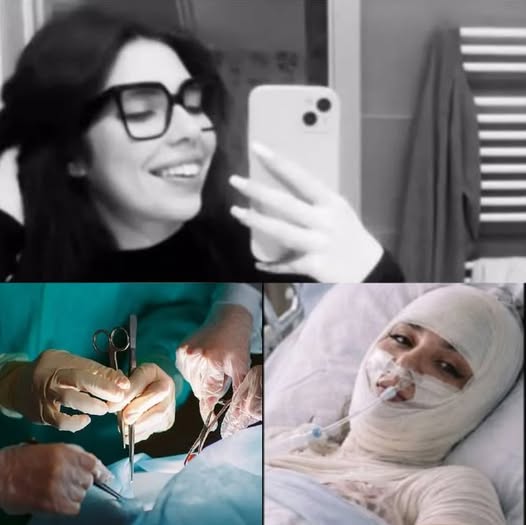
Tragedia a Crans Montana: Elsa Rubino, l’intervento chirurgico e la lunga lotta per la vita
Tragedia a Crans Montana: Elsa Rubino, l’intervento chirurgico e la lunga lotta per la vita La tragedia che ha colpito Elsa Rubino, la quindicenne biellese rimasta gravemente ustionata nell’incendio del locale Le Constellation a Crans Montana, ha scosso non solo la sua famiglia, ma tutta la comunità di Biella e il mondo intero. La giovane, […]
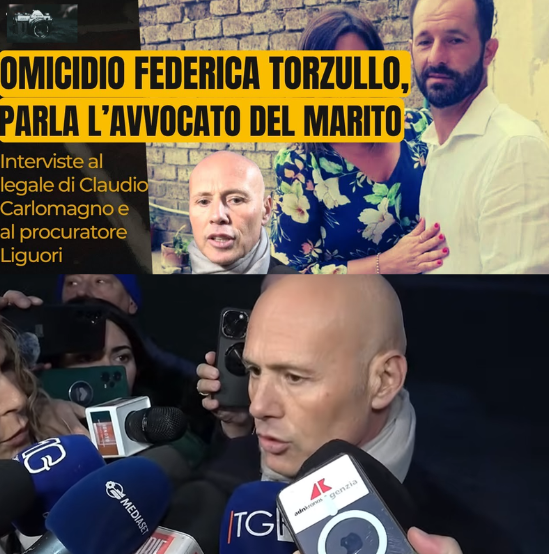
Caso di omicidio di Federica Torzullo: il marito Carlomagno aveva un avvocato: “Ecco perché litigavano…”
Caso di omicidio di Federica Torzullo: il marito Carlomagno aveva un avvocato: “Ecco perché litigavano…” Lunedì il mio assistito si è avvalso della facoltà di non rispondere per un’unica ragione, perché noi non eravamo stati notiziati del decreto di Fermo che c’è stato notificato in carcere alle ore 2:30. Questa è stata l’unica motivazione, quindi […]
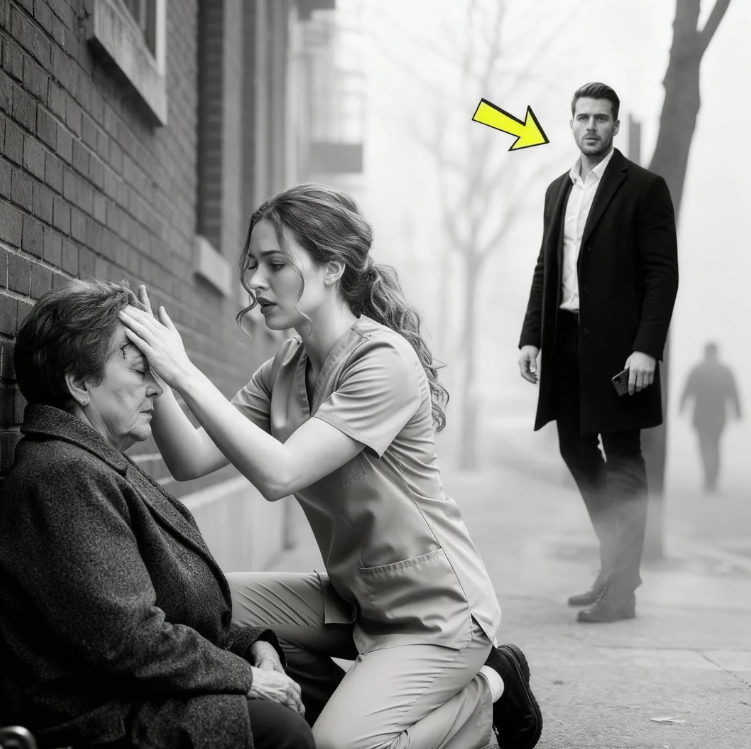
Una timida studentessa di infermieristica ha saltato l’esame per aiutare uno sconosciuto: il giorno dopo, un CEO è andato a cercarla.
Una timida studentessa di infermieristica ha saltato l’esame per aiutare uno sconosciuto: il giorno dopo, un CEO è andato a cercarla. Aveva 18 minuti per salvare il suo futuro. La donna che sanguinava sul marciapiede aveva forse cinque minuti di vita. Cosa sarebbe scegli? Questa è la vera storia di come si fa una scelta […]
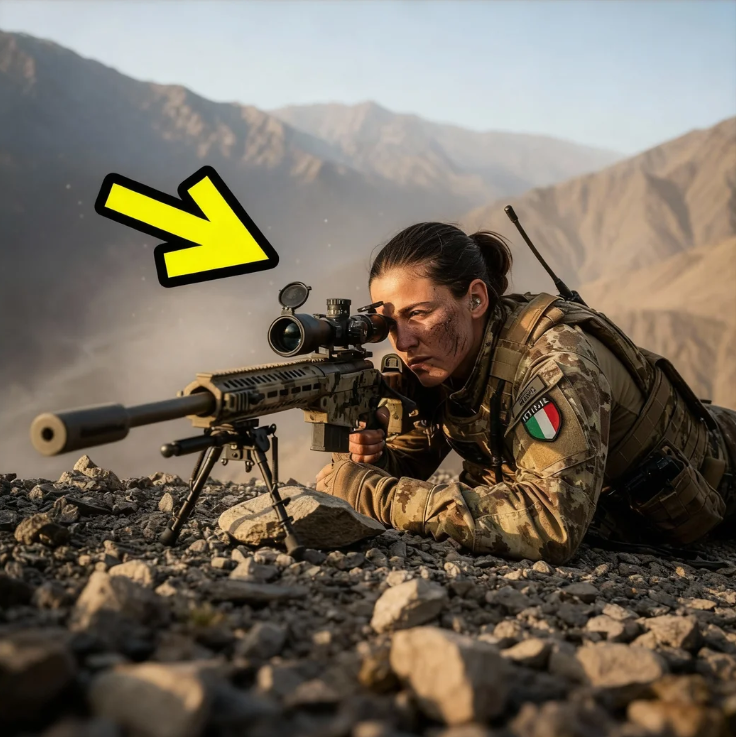
“Chi sta sparando?” — Il comandante dei SEAL rimase immobile mentre gli spari echeggiavano da soli 3 metri di distanza nella valle.
“Chi sta sparando?” — Il comandante dei SEAL rimase immobile mentre gli spari echeggiavano da soli 3 metri di distanza nella valle. Oggi vi raccontiamo la storia di un colpo di fucile che echeggiò attraverso una valle afghana e gelò il sangue nelle vene di un comandante degli incursori della Marina Militare italiana, non per […]
End of content
No more pages to load